How to Buy Property in Paraguay as a Foreigner
A step-by-step guide for foreigners buying property in Paraguay: what the law allows, the border zone rule, the escribano, the registry and payments.
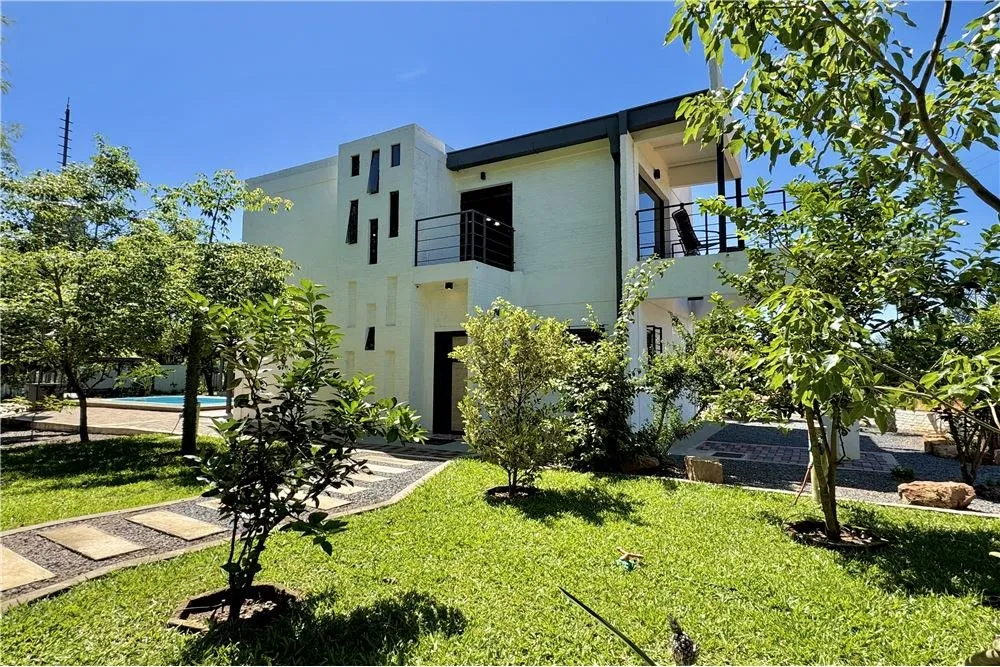
Thinking about moving to Paraguay or investing in Greater Asunción? Here is the good news: as a foreigner, you can buy property on almost the same terms as a Paraguayan. There is one specific exception and a process with clear steps. Here they are, in order.
Can foreigners buy property in Paraguay?
Yes. Paraguay’s Investment Law (Law 117/91) gives foreign investors the same guarantees, rights and obligations as Paraguayan investors, with no limits other than those set by law (art. 2), and it guarantees property rights (art. 5).
You also don’t need to be a resident to buy. If you want to live here too, residency is a separate process with the Dirección Nacional de Migraciones. In 2026 the government launched the Paraguay Investor Pass, a path to permanent residency for foreigners who invest in the country, with real estate among the options. Check current amounts and requirements with Migraciones and the Ministry of Industry and Commerce.
The exception: the border security zone
Law 2532/05 defines the border security zone as the 50-kilometer strip along Paraguay’s land and river borders. Inside that strip, unless the Executive grants authorization by decree on public-interest grounds, nationals of neighboring countries, and companies majority-owned by them, cannot own, co-own or hold a usufruct over rural property.
In practice:
- It only covers rural property. A house or a condo in an urban area is not affected by this rule.
- It only covers nationals of neighboring countries: Argentina, Brazil and Bolivia. A buyer from the US or Europe, for example, is not affected.
- There are exceptions. Law 2647/05 protects, among other cases, rights acquired before the law, inheritances, and neighboring-country nationals with permanent residency in Paraguay.
- The consequences are serious. Transactions that break the law are void, voidness carries a fine of twice the transaction value, and notaries cannot turn them into a public deed.
A heads-up: the Paraguay River separates Asunción from Argentina, so areas near the city may fall inside the strip. If you are Argentine, Brazilian or Bolivian and you are looking at rural land, such as a small farm, ask the escribano to confirm its status before you put down a deposit: the law requires cadastral certificates to state whether a property lies totally or partially within the zone.
Step by step
1. Choose the property and get the title details
Before making an offer, ask for a copy of the title or its registration details (finca or matrícula number and district) plus its cadastral account number, so your escribano can start checking. If you are still browsing, filter the available houses or condos.
2. Reserve with a deposit, always in writing
Many purchases start with a reservation and an earnest money deposit, called a seña. The Civil Code (art. 723) sets the default rule: if the person who paid the deposit backs out, they lose it; if the person who received it backs out, they must return it plus the same amount again, so double. Put in writing the amount, the property, the price, the deadline and what happens if the title search finds a problem. Be wary of reservations without a contract or advance payments without paperwork.
3. The title search and the escribano’s role
In Paraguay, the escribano público is a notary who drafts and authorizes the deed, a far bigger role than a US notary public, and who checks that the deal is in order before signing. A recent change: since January 14, 2026, the Registro Unificado Nacional (RUN), created by Law 7424/25 and run under the Supreme Court, has handled the functions of the former public registries office (Dirección General de los Registros Públicos), the national cadastre and the surveying department.
Today the escribano requests the certificado catastral registral inmobiliario, a single certificate that brings together the property’s registry and cadastral information and replaces the two certificates that used to be processed separately. With it, the escribano checks:
- that the seller is the registered owner;
- that there are no mortgages, liens or court orders blocking the sale;
- that registry and cadastral data match (overlapping titles are a known problem, especially outside the capital);
- that the property tax, which is municipal, is paid up;
- that the right people sign: if the seller is married and the property is marital community property, Law 1/92 (art. 42) requires both spouses, or one of them with a special power of attorney from the other;
- where relevant, whether the property lies in the border security zone.
4. Purchase agreement or straight to the deed
The boleto de compraventa is a private purchase agreement in which both parties commit to signing the deed. Under the Civil Code (art. 701), a contract that requires a public deed but is signed privately is not concluded until the deed is signed, but it is binding as a commitment to sign it, and if one party refuses, the other can sue to compel the deed (art. 702). A boleto is useful when something is pending, such as a loan or a certificate; if everything is ready, you can go straight to the deed.
5. Public deed and registration
A real estate transfer is done by public deed (escritura pública) before the escribano (art. 700). The escribano then files it for registration: ownership passes by contract, but the title must be registered to be effective against third parties (art. 1968).
Documents you will usually need
- A valid ID: a Paraguayan cédula if you have one, otherwise your passport.
- Your marital status and, if you are married, your spouse’s details.
- If you buy through a company: its registered bylaws, the minutes appointing its officers and the signer’s power of attorney.
- If someone signs for you: a power of attorney granted by public deed (art. 700). If you sign it abroad, it must carry an apostille (Paraguay has applied the Apostille Convention since August 2014) or be legalized; if it is in another language, ask the escribano about translation.
- Whatever is requested for due diligence: real estate agencies, agents and developers are obliged parties under anti-money-laundering rules (SEPRELAD Resolution 201/20) and must apply know-your-customer procedures.
How payments usually work
- Deposit at reservation, balance at closing. It is the simplest structure, and the Civil Code itself refers to the price due when the deed is signed (art. 702).
- Currency. Agree in the boleto whether the price is in US dollars or guaraníes.
- Traceable payment methods. Use bank transfers or bank checks and avoid cash.
- If you are not a resident, plan ahead. According to the US State Department’s 2024 report, foreigners need legal residency to open a bank account in Paraguay. The same report notes there are no restrictions on converting or transferring investment funds.
How much does closing cost?
There is no single number. The escribano’s fees follow the legal fee schedule in Law 1307/87, calculated with percentages and minimum-wage equivalents, plus registry fees and whatever taxes apply to the transaction. Ask the escribano for a written breakdown before signing, and agree on who pays each cost.
Want to see real options or talk through your case? Message Matías Vera on WhatsApp: his assistant Vera answers right away, and Matías accompanies you through the whole process until signing. Matías is a RE/MAX Black agent who works across Greater Asunción in buying, selling and renting. You can also start by browsing the available properties.
This article is general information, not legal or tax advice. Rules can change: before you buy, review your case with an escribano or a lawyer.
FAQ
Can foreigners buy property in Paraguay?
Yes. Law 117/91 gives foreign investors the same rights as Paraguayan investors. The main exception covers rural property inside the border security zone, and only for nationals of neighboring countries.
Do I need to be a resident to buy?
No. Residency is a separate process with the Dirección Nacional de Migraciones, in case you also want to live in Paraguay.
What is the border security zone?
It is the 50-kilometer strip along Paraguay's land and river borders (Law 2532/05). Inside it, nationals of Argentina, Brazil and Bolivia cannot own rural property, unless authorized by decree or covered by the exceptions in Law 2647/05.
How much does closing cost?
It depends on the price and the case: the escribano's fees under the Law 1307/87 fee schedule, registry fees and any applicable taxes. Ask the escribano for a written breakdown before signing.
Sources
- Law No. 2532/05 establishing the border security zone (FAOLEX)
- Law No. 2647/05 amending article 3 of Law 2532/05 (FAOLEX)
- Law No. 117/91 on Investments (text published by ICEX)
- Civil Code of Paraguay, Law 1183/85 (OAS)
- Law No. 1/92 partially reforming the Civil Code (Judiciary of Paraguay)
- Ferrere: the Registro Unificado Nacional is created (Law 7424/25)
- Judiciary of Paraguay: 100 days of the RUN
- Judiciary of Paraguay: the digital Certificado Catastro Registral Inmobiliario
- InfoNegocios: what changes with the Registro Unificado Nacional
- InfoNegocios: investing in apartments in Paraguay (Guillermo Ehreke)
- Chambers, Investing In 2026: Paraguay (BKM Berkemeyer)
- The Rio Times: Buying property in Paraguay as a foreigner (2026)
- U.S. Department of State: 2024 Investment Climate Statements, Paraguay
- DNIT: taxable base of professional fees (Law 1307/87)
- Ferrere: anti-money-laundering rules for the real estate sector (SEPRELAD Res. 201/20)
- HCCH: Apostille Convention status table
- La Nación: Paraguay launches the Investor Pass
- Wikipedia: Asunción